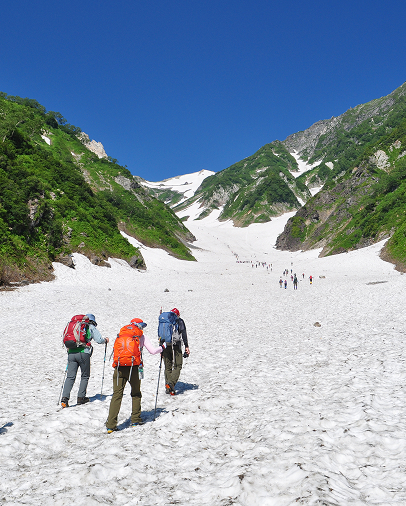
登山・トレッキング
スキー場
白馬村の四季
アクティビティー
Hakuba All-Season Resort – Experience Japan’s Mountain Life
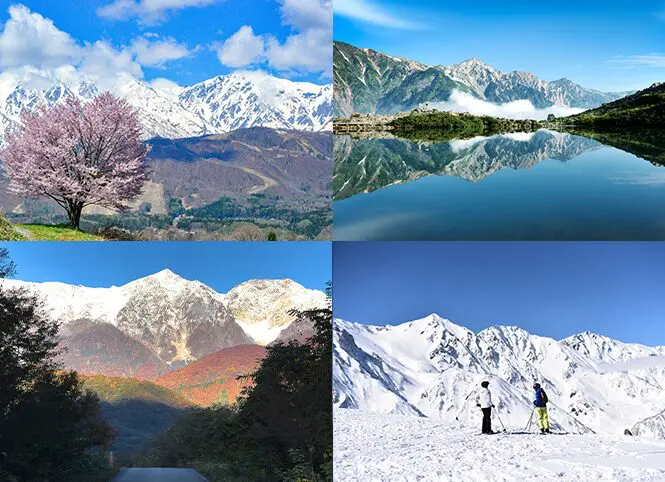
Set in the Northern Japanese Alps, Hakuba is an all-season mountain playground.
Heavy snow defines the winter months, but as the slopes thaw, the landscape opens to color and quiet. Each season brings its own pace — steady, natural, and always tied to the mountains.
While Hakuba’s reputation begins with skiing, its appeal endures long after the lifts stop spinning. Throughout the year, the Hakuba Valley is a place for travellers who value space, scenery, and time outdoors.
Spring in Hakuba Valley
Spring in Hakuba balances two worlds. The upper slopes keep their snow until early May, while the valley floor turns green under the warm sun. It’s possible to ski in the morning and walk among cherry blossoms by afternoon.
Cherry blossoms usually reach their peak from late April through the first week of May, especially around Oide Park and along the Himekawa River. The gondolas continue to carry skiers during this time, but by late May, they shift their focus toward scenic rides for hikers and sightseers.
Tips for spring visitors
- Best window: mid-April to early May for cherry blossoms and spring skiing.
- Weather: mild days, cool nights (10–18°C).
- Trails: valley walks open early; alpine trails and nature parks open from June.
- Highlights: quiet onsen visits, riverside strolls, and views of snow and blossom in one frame.
Summer in Hakuba Valley
By June, the snow has retreated to the highest peaks, and the valley is entirely green. Days are long and comfortable, with average highs ranging from 24 to 26°C, and cool evenings. It’s an easy season for hiking, biking, or simply spending time outdoors.
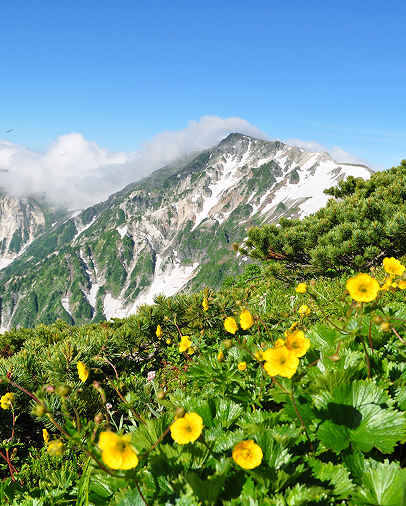
The Tsugaike Nature Park opens from early June, with broad wooden walkways winding through alpine meadows and wetlands. Hakuba Iwatake Mountain Resort and Hakuba47 areas convert to mountain biking and scenic gondola rides, while Lake Aoki offers kayaking, paddleboarding, and quiet spots for camping beside the clear water.
In August, festivals return to Hakuba Village. Lanterns and drums mark the Bon Odori, and fireworks echo across the valley.
Tips for summer visitors
- Best window: late June to early August.
- Weather: comfortable; occasional short rain showers.
- Highlights: hiking, cycling, water activities, and summer festivals.
- Why go: cooler air than the cities and wide access to nature.
Autumn in Hakuba Valley
Autumn changes Hakuba’s tone entirely. By late September, color begins to creep down from the high ridges. Tsugaike Mountain Resort and the Goryu Alpine Garden peak around early to mid-October, while the valley follows through late October into early November.
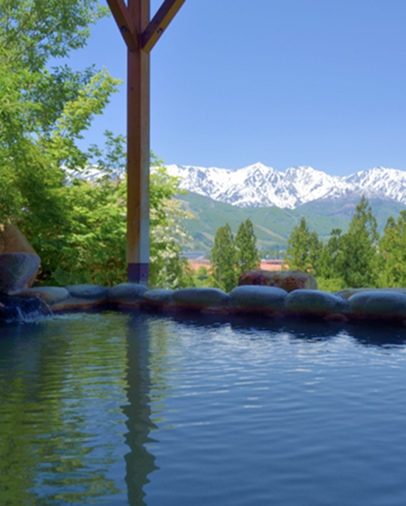
Clear air and lower temperatures — typically between 8 °C and 18°C — make it ideal for walking or photography. The village is calm, the light is even, and the food turns seasonal: mountain vegetables, mushrooms, and apples appear on local menus. Outdoor onsens such as Happo-no-Yu and Mimizuku-no-Yu are especially appealing under the cool evening air.
Tips for autumn visitors
- Best window: early October (mountains) to early November (valley).
- Weather: cool and dry; bring a jacket.
- Highlights: foliage views, scenic gondolas, quiet hikes, and harvest cuisine.
Winter in Hakuba Valley
Snow defines Hakuba’s winter. Ski Resorts such as Happo-one, Goryu/47, and Tsugaike typically open from late November and continue through early May, depending on conditions. Powder is most reliable in January and February, when storms sweep through regularly.
In February, the Happo-one Fire Festival lights the night with torch runs and fireworks — a long-standing event that celebrates both snow and community.
Tips for winter visitors
- Best window: mid-December to late March for peak snow.
- Weather: average highs around 0°C; lows near –5°C.
- Highlights: skiing, snowboarding, snowshoeing, onsen, fire festival.
- Why go: reliable deep powder snow, mountain atmosphere, and easy access to both adventure and rest.
Living the Seasons in Hakuba
Hakuba’s rhythm changes throughout the year. Trails become ski runs, ski runs turn to hiking paths, and the same peaks watch over it all. Local lodges and restaurants naturally shift with the seasons — offering hotpot in winter, fresh vegetables in summer, and apples and mushrooms in autumn.
Each visit shows a different side of the valley:
- Spring for renewal and quiet contrast.
- Summer for open air and green mountains.
- Autumn for calm color and clear light.
- Winter for snow and adventure.
For travelers looking to experience Japan’s mountains beyond a single season, Hakuba offers four complete reasons to return.
FAQ
When is cherry blossom season in Hakuba?
Cherry blossoms typically bloom from late April to early May, later than in Japan’s major cities, due to the higher elevation. Oide Park and the riverside paths near the station are among the best spots for viewing.
Is there still skiing in spring?
Yes. Most Hakuba Valley ski resorts stay open through the first week of May (Golden Week), offering soft spring snow and quieter slopes.
When do hiking trails open?
Lower trails around the valley are walkable by mid to late April. Higher-elevation areas, such as Tsugaike Nature Park and Happo-One Ridge, usually open from early June, once the snow has melted.
What is summer weather like?
Summer in Hakuba is warm but not as humid as the rest of Japan, with average highs of 30°C and cooler nights. Afternoon showers are brief, and the air stays fresh compared to Japan’s coastal cities.
When does the autumn foliage peak?
Colors start in the high mountains in early October and reach the valley in late October to early November: Gondolas and scenic lifts run through most of October for foliage viewing.
What happens in Hakuba during winter besides skiing?
Winter brings snowshoe tours, onsen visits, and village events. In February, the Happo-one Fire Festival combines traditional torch runs, fireworks, and local food stalls — a highlight of the season.
Is Hakuba worth visiting outside of winter?
Absolutely. Each season offers a unique scenery and a range of outdoor activities, and the valley is increasingly recognized for its hiking, cycling, and summer lakes. Fewer visitors outside winter mean a relaxed pace and open space to explore.
記事をシェアする