アクティビティー
Cycling, Safety, and Rules in Hakuba
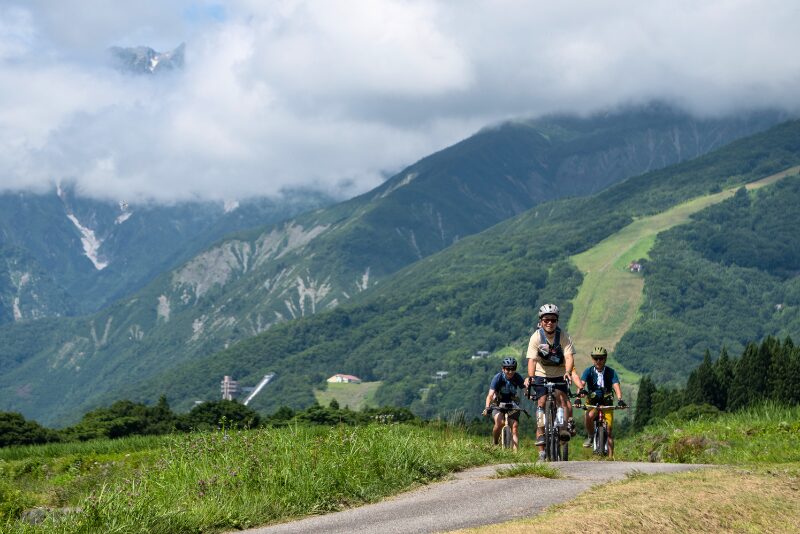
Hakuba is quickly becoming one of Japan’s premier cycling destinations. Surrounded by the Northern Alps and dotted with charming rural landscapes, the area offers everything from long, scenic road rides to challenging hill climbs.
For cyclists eager to explore Japan on two wheels, Hakuba is a must-ride. Events like the Hakuba Cycle Fiesta and the Hakuba Hill Climb are a sign that the local cycling scene is blossoming.
But before you clip in and hit the road, it’s essential to understand the rules and expectations around cycling in Japan—and how Hakuba fits into that picture.
How to Get to Hakuba with Your Bike
Bringing your own bike to Hakuba requires a bit of planning, especially if you’re taking public transport:
- From Tokyo, take the Hokuriku Shinkansen to Nagano Station, then transfer to the Alpico Express Bus for Hakuba.
Bicycles must be in a rinko bag (bike bag) to board trains. You must remove at least the front wheel and place your bike in a bag. Handlebar ends and pedals must not protrude.
Pro tip: Avoid traveling during rush hours. Even with a rinko bag, maneuvering a bike through crowded stations can be tough.
Where to Ride in Hakuba
Hakuba offers a diverse range of cycling routes. Whether you’re a road cyclist looking for smooth climbs or a casual rider enjoying valley views, there’s something for everyone.
Rural Scene Along the Hime River
- Distance: 12.1 km │ Elevation: 40 m
- Gentle route for complete beginners.
- Follows the Himekawa River through open farmland and historic areas.
- Great mix of cycling + light walking at the Headwaters Nature Garden.
Tsugaike Scenic Route (Shio no Michi)
- Distance: 19.7 km │ Elevation: 161 m
- Beginner-friendly route following the historic Salt Road.
- Highlights include riverside riding, small shrines, stone Buddhas, and traditional scenery.
- Ends in the flower-rich Tsugaike Kogen highlands.
Village Forest & Nishina Three Lakes
- Distance: 40.4 km │ Elevation: 274 m
- Best for intermediate to advanced riders.
- Forest roads, rolling terrain, and crystal-clear lakes (Aoki, Nakatsuna, Kisaki).
- A “travel-feeling” ride through hot spring villages and deep satoyama landscapes.
Rules of the Road in Japan
Japan has strict—and sometimes counterintuitive—cycling laws. Enforcement may be inconsistent, but the consequences can be serious. Here are the rules every cyclist should follow:
- Ride on the road, not sidewalks, unless marked. If you must ride on the sidewalk, keep speeds below 10 km/h and give way to pedestrians.
- Always ride in the direction of traffic. Riding against traffic is illegal.
- Stay left on both the road and shared paths.
- Wear a helmet. Not required for adults, but strongly recommended, especially on unfamiliar roads.
- Use a light at night. Front white lights and rear reflectors are mandatory after dark.
- Don’t use mobile phones or headphones while cycling.
- Don’t ride two-abreast, unless explicitly marked.
- Don’t ride drunk. Penalties include jail, heavy fines, and potential deportation for foreigners.
Parking Your Bike
Hakuba is more relaxed than major cities, but improper parking can still result in your bike being impounded. Follow these tips:
- Use designated bike racks, especially near stations or busy shopping areas.
- Do not lock your bike to fences or street signs.
- Most hotels and accommodations offer secure parking—ask ahead.
Renting Bikes in Hakuba
If you aren’t bringing your own bike, Hakuba offers multiple rental shops with high-quality road bikes and e-bikes. Some options include:
- Rhythm Japan (Hakuba)
- Spicy Rentals
- Hakuba Sanroku Tours
Make sure to reserve in advance during peak season (spring to early autumn).
Common Mistakes That Can Ruin Your Ride
Even seasoned cyclists can run into trouble if they’re not aware of Japan’s unique cycling culture. Avoid these:
- Assuming sidewalk cycling is always okay
- Riding without lights at night
- Forgetting your rinko bag for train travel
- Parking without checking for “No Bicycle Parking” signs
FAQs
Can I bring my bike on the Shinkansen to Hakuba?
Yes, but it must be disassembled and packed in a rinko bag.
Are helmets mandatory in Hakuba?
Not for adults, but highly recommended due to variable terrain and traffic.
Are there English-language bike tours or guides available?
Yes, especially during major cycling events. Some rental shops also offer guided rides.
Can I ride in the winter?
No. Hakuba’s roads are often icy or snow-covered between December and March. The cycling season typically runs from April through November.
記事をシェアする